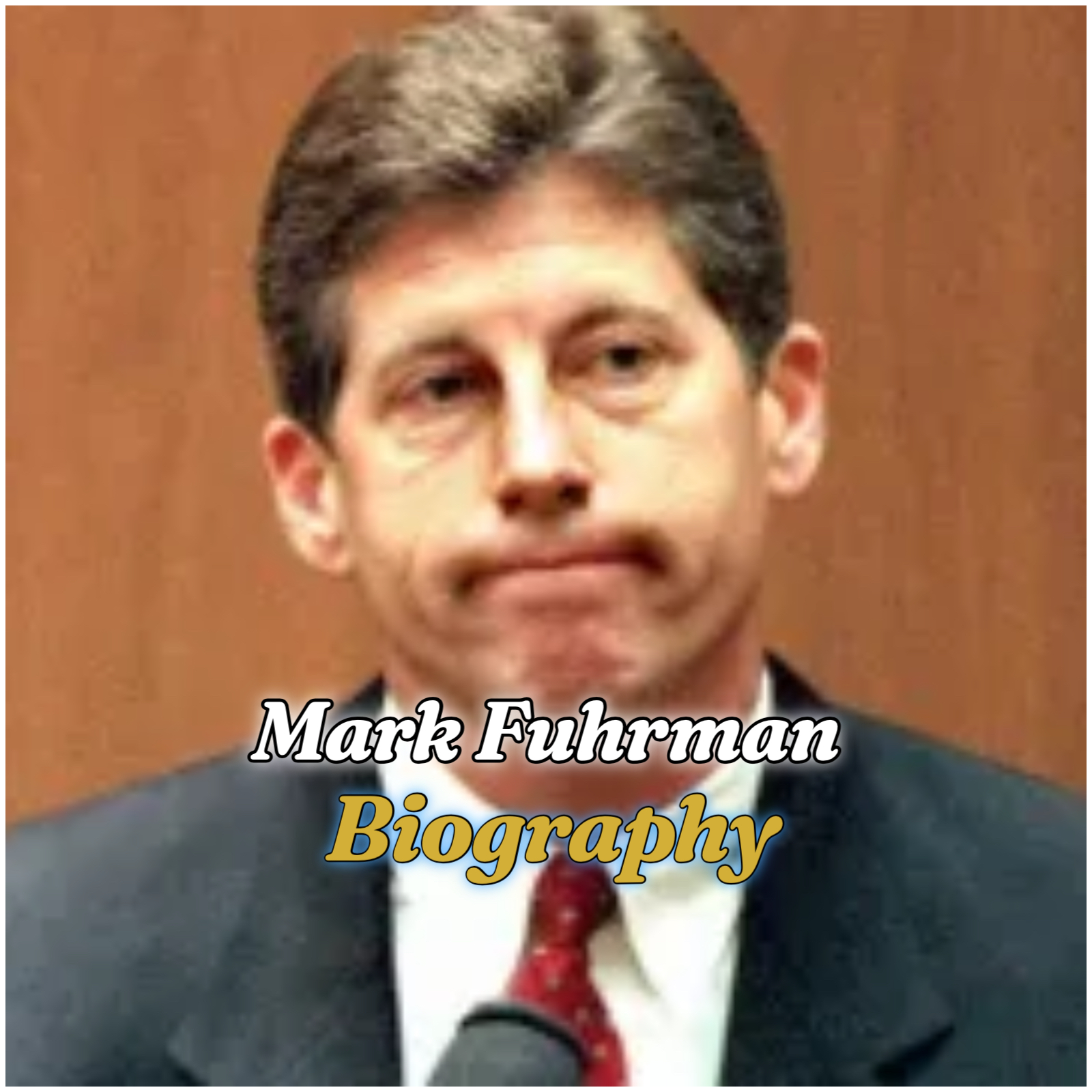
Introduction To Mark Fuhrman Biography
Mark Fuhrman was an American former police detective, author, and television commentator who became one of the most controversial figures in United States criminal justice history. Born on February 5, 1952, in Eatonville, Washington, he gained worldwide attention during the 1994 murder investigation involving O. J. Simpson. Fuhrman played a major role in the investigation as a detective with the Los Angeles Police Department and became widely known after discovering a bloody glove that prosecutors used as critical evidence during the trial.
His public image changed dramatically during the court proceedings when taped recordings surfaced showing him repeatedly using racist language and discussing misconduct within policing. The revelations damaged the credibility of the prosecution’s case and turned Fuhrman into one of the central figures of controversy in the highly publicized trial. In 1996, he pleaded no contest to perjury after denying under oath that he had used racial slurs, making him the only person criminally convicted in relation to the Simpson case.
After retiring from the LAPD, Fuhrman rebuilt his career as a crime analyst, radio host, and bestselling true-crime author. He appeared regularly on television networks discussing major criminal investigations and wrote books covering famous murder cases and law enforcement issues. Recent reports confirmed that Mark Fuhrman died on May 12, 2026, at the age of 74 after battling throat cancer, bringing renewed public attention to his complicated legacy in American policing and legal history.
Mark Fuhrman Early Life and Background
Mark Fuhrman was born on February 5, 1952, in Eatonville, Washington, United States. He spent much of his childhood in Washington State and grew up during a period when discipline, patriotism, and military service strongly influenced many American families. His parents later divorced while he was still young, an experience that shaped much of his early outlook on life and independence.
Fuhrman attended Peninsula High School in Gig Harbor, Washington. During his teenage years, he developed a strong interest in law enforcement, discipline, and military structure. People who knew him during that period described him as serious, determined, and highly competitive. His interest in authority and policing became more visible as he approached adulthood.
At the age of 18, he joined the United States Marine Corps in 1970. His time in the military played a major role in shaping his personality and future career path. He served as both a machine gunner and military policeman, gaining experience in discipline, weapons handling, and security operations. Fuhrman eventually left the Marines honorably in 1975 with the rank of sergeant.
Soon after completing his military service, he decided to pursue a career in law enforcement. He enrolled in the Los Angeles Police Academy and officially joined the Los Angeles Police Department later in 1975. This marked the beginning of a policing career that would eventually place him at the center of one of the most famous criminal trials in modern American history.
Mark Fuhrman Education
Mark Fuhrman completed his early education in Washington State, where he attended Peninsula High School in Gig Harbor. During his school years, he was known for being disciplined and focused, qualities that later influenced his decision to pursue military and law enforcement careers. His educational background was more practical and service-oriented rather than academic or research-based.
After finishing high school, Fuhrman chose to enter the United States Marine Corps instead of attending a traditional university. His military training became a major part of his personal and professional development. While serving in the Marines, he received specialized instruction in military policing, weapons handling, tactical operations, and discipline. The experience provided him with structured training that later helped prepare him for police work.
Following his military service, Fuhrman attended the Los Angeles Police Academy in 1975. At the academy, he underwent intensive law enforcement training focused on criminal investigations, patrol operations, firearms use, legal procedures, and public safety. The program officially prepared him for his career with the Los Angeles Police Department.
Although Mark Fuhrman did not become widely known for university education or academic achievements, his military and police academy training played a central role in shaping his investigative skills and career path. His education was built largely through practical field experience, structured police instruction, and years of active service in law enforcement.
Mark Fuhrman Career and Rise to Fame
Mark Fuhrman began his professional career shortly after leaving the United States Marine Corps in 1975. That same year, he joined the Los Angeles Police Department after completing training at the Los Angeles Police Academy. In the early years of his policing career, he worked in patrol assignments and gradually built experience handling criminal investigations, violent crimes, and street-level law enforcement operations across Los Angeles.
Over time, Fuhrman earned promotion into detective work and became known for his aggressive investigative style. He eventually joined the LAPD’s homicide division, where he handled serious criminal cases involving murder investigations and violent offenders. Colleagues viewed him as hardworking and determined, while critics later accused him of misconduct and abusive policing methods. Despite the controversies that would later emerge, he spent nearly two decades building a reputation as an experienced homicide detective within the department.
Fuhrman’s career reached global attention in 1994 during the murders of Nicole Brown Simpson and Ronald Goldman. He became one of the lead detectives involved in the investigation against O. J. Simpson. During the investigation, Fuhrman discovered a bloody glove at Simpson’s estate, which prosecutors considered one of the most important pieces of evidence in the case. The trial quickly became one of the most watched criminal proceedings in modern history and turned Fuhrman into a widely recognized public figure.
However, his testimony during the trial became deeply controversial after audio recordings surfaced in which he repeatedly used racist slurs and described violent police behavior. During cross-examination, the defense team challenged his credibility and argued that evidence may have been manipulated because of racial bias. The controversy severely damaged public trust in both Fuhrman and parts of the prosecution’s case. In 1996, he pleaded no contest to perjury after denying under oath that he had used racial slurs. He became the only person criminally convicted in connection with the O.J. Simpson trial.
After retiring from the LAPD in 1995, Fuhrman transitioned into media and publishing. He reinvented himself as a bestselling true-crime author and television commentator. He wrote several books focused on criminal investigations, murder cases, and policing issues, including works discussing the Simpson investigation and other famous crimes in American history. His books attracted strong public interest because of his insider perspective as a former homicide detective.
Fuhrman also became a regular television and radio personality. He worked as a crime analyst for networks including Fox News, where he frequently commented on high-profile criminal cases and legal developments. Over the years, he remained a divisive public figure. Some viewers respected his investigative knowledge and experience, while others continued to criticize his past conduct and controversial role in the Simpson case.
In later life, Fuhrman lived quietly in Idaho and largely stayed away from major public controversies. Even after retirement, his name remained strongly connected to the O.J. Simpson trial, which continued to shape discussions about race, policing, media influence, and the American justice system. His career remains one of the most debated law enforcement stories in modern United States history.
Mark Fuhrman Personal Life
Mark Fuhrman largely kept his private life away from intense public attention despite becoming one of the most recognizable figures connected to the O.J. Simpson trial. Over the years, he was married multiple times and preferred living a quieter lifestyle after retiring from active police service. Although much of his family life remained private, people close to him described him as independent, disciplined, and deeply shaped by his military and law enforcement background.
Following his retirement from the Los Angeles Police Department in 1995, Fuhrman moved away from the spotlight of Los Angeles and eventually settled in Idaho. He enjoyed a more isolated lifestyle compared to his years as a public figure during the highly televised O.J. Simpson trial. In Idaho, he spent much of his time writing books, giving occasional media interviews, and working as a crime commentator for television networks.
Fuhrman had a strong interest in true crime, criminal investigations, and military history. He became a successful author and used his experiences in law enforcement as inspiration for many of his books and media appearances. His work often focused on famous murder investigations, policing methods, and controversial criminal cases in the United States.
Despite rebuilding a career in media and publishing, Fuhrman remained a deeply controversial figure throughout his life. Supporters viewed him as a skilled homicide detective with valuable investigative knowledge, while critics continued to associate him with racial controversy and misconduct allegations connected to the O.J. Simpson case. The public debate surrounding his legacy followed him for decades and shaped much of how he was perceived personally and professionally.
In his later years, Fuhrman lived quietly and avoided major public attention. Reports following his death in May 2026 stated that he spent much of his final period focusing on his health and private life while battling throat cancer. Even after stepping away from active law enforcement, his name remained permanently linked to one of the most famous criminal cases in modern American history.
Mark Fuhrman Death and Cause of Death
Mark Fuhrman died on May 12, 2026, at the age of 74. Authorities in Idaho later confirmed his death, while multiple media reports revealed that he had been battling an aggressive form of throat cancer for some time before passing away. Reports stated that he had been hospitalized for about a week during the final stage of his illness.
According to reports published after his death, Fuhrman had undergone cancer treatment following his diagnosis in 2025. However, sources close to him stated that he eventually decided to stop treatment as his condition worsened. It was also reported that there would be no public funeral service.
His death quickly attracted international media attention because of his controversial role in the 1994 O.J. Simpson murder investigation and trial. News outlets revisited his involvement in the case, including his discovery of the bloody glove that became one of the prosecution’s most important pieces of evidence and the later controversy surrounding racist remarks and perjury charges.
Following the announcement of his death, reactions emerged from journalists, legal analysts, and people connected to the O.J. Simpson case. Some remembered him as an experienced homicide detective, while others continued to criticize the impact his actions had on one of the most famous criminal trials in American history. His death renewed public discussion about race, policing, and the lasting legacy of the Simpson trial in the United States.
Mark Fuhrman Legacy
Mark Fuhrman left behind one of the most controversial and widely debated legacies in American law enforcement history. His role in the 1994 O.J. Simpson murder investigation placed him at the center of a case that transformed media coverage of criminal trials in the United States. The discovery of the bloody glove at Simpson’s estate made Fuhrman one of the most recognizable detectives in the world, and his testimony became a major turning point in the trial. For many Americans, his name became permanently connected to discussions about policing, race, and the justice system.
At the same time, Fuhrman’s legacy was heavily shaped by the racist language controversy that emerged during the trial. The release of audio recordings in which he used racial slurs damaged public confidence in both his credibility and parts of the investigation itself. His later perjury conviction became a historic moment that intensified national conversations about police misconduct, racial bias, and fairness within the legal system. Critics viewed him as a symbol of problems within law enforcement culture during that era, while supporters argued that his investigative experience was overshadowed by controversy.
Beyond the Simpson case, Fuhrman built a second career as a bestselling true-crime author and television crime analyst. He wrote books on famous criminal investigations and became a familiar media voice on major legal cases in the United States. Even decades after retiring from the LAPD, his influence continued through documentaries, books, television dramas, and public discussions about one of the most famous trials in modern history. His life remains a lasting example of how a single criminal case can define both a career and a public legacy for generations.
Conclusion
Mark Fuhrman lived a life marked by both professional achievement and lasting controversy. From serving in the United States Marine Corps to becoming a homicide detective with the Los Angeles Police Department, he built a career that eventually placed him at the center of one of the most famous criminal trials in American history. While his investigative work brought him worldwide recognition, the racial controversy and perjury conviction connected to the O.J. Simpson case permanently shaped public opinion about him. Even after retiring and building a successful career as an author and television commentator, his name remained closely tied to debates about race, policing, media influence, and justice in America.
Frequently Asked Questions About Mark Fuhrman
1. Who was Mark Fuhrman?
Mark Fuhrman was an American former LAPD homicide detective, author, and television commentator who became internationally known during the O.J. Simpson murder investigation and trial in 1994.
2. When and where was Mark Fuhrman born?
Mark Fuhrman was born on February 5, 1952, in Eatonville, Washington, United States, where he spent much of his early childhood before later joining the military and law enforcement.
3. Why is Mark Fuhrman famous?
He became famous because of his major role in the O.J. Simpson murder investigation, especially after discovering the bloody glove that became a key piece of evidence during the trial.
4. What controversy surrounded Mark Fuhrman?
Fuhrman became controversial after audio recordings surfaced showing him repeatedly using racist language despite denying it under oath during the O.J. Simpson trial proceedings.
5. Was Mark Fuhrman convicted of a crime?
Yes. In 1996, Mark Fuhrman pleaded no contest to perjury after falsely denying under oath that he had used racial slurs during recorded conversations.
6. What did Mark Fuhrman do after retiring from the LAPD?
After retiring from the Los Angeles Police Department, he became a bestselling true-crime author, television crime analyst, and radio personality discussing major criminal investigations.
7. Did Mark Fuhrman serve in the military?
Yes. Before joining the LAPD, Fuhrman served in the United States Marine Corps as a machine gunner and military policeman, eventually leaving with the rank of sergeant.
8. When did Mark Fuhrman die?
Mark Fuhrman died on May 12, 2026, at the age of 74 after reportedly battling an aggressive form of throat cancer for several months.
9. What was Mark Fuhrman’s cause of death?
Reports released after his passing stated that Mark Fuhrman died from complications related to throat cancer after reportedly stopping treatment during the final stage of his illness.
10. What is Mark Fuhrman’s legacy today?
Mark Fuhrman’s legacy remains deeply controversial because he is remembered both as an experienced homicide detective and as a central figure in debates about race, policing, and justice in America.